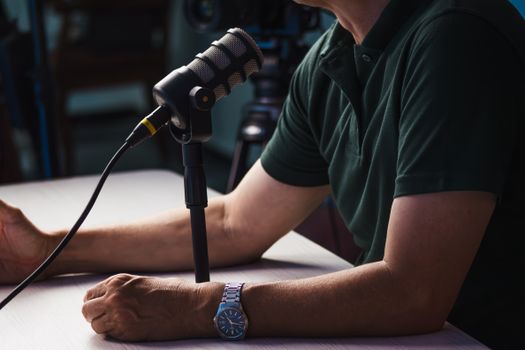
The evolving relationship between journalism and nonprofit organizations has become a powerful force for impactful storytelling, investigative reporting, and public service journalism in the United States. As traditional newsrooms grapple with shrinking budgets and staff reductions, these partnerships have emerged as a lifeline for ambitious reporting projects that might otherwise go untold. According to the United States Press Association (USPA), collaborations between journalists and nonprofit organizations are not only filling critical information gaps but also setting new standards for transparency, accountability, and community engagement. This article explores successful examples of such collaborations, highlighting their unique strengths, measurable outcomes, and the transformative effect they have on both the media landscape and society at large.
The Rise of Nonprofit Journalism Partnerships in the US
Over the past decade, the number of nonprofit news organizations in the United States has surged. According to the Institute for Nonprofit News (INN), there were over 400 nonprofit news outlets operating across the country as of 2023, compared to just 27 in 2009. This explosive growth reflects not only the public’s hunger for high-quality, mission-driven journalism but also the willingness of nonprofits to invest in stories that serve the public interest.
Journalists are increasingly turning to nonprofit organizations for resources, data, expertise, and funding. These collaborations allow for in-depth coverage of complex issues such as climate change, public health, social justice, and government accountability—topics that often require months of research and cross-disciplinary cooperation. The USPA has identified these partnerships as essential to the vitality of American journalism, especially in an era marked by misinformation and declining local news coverage.
Case Study: ProPublica and Local Newsrooms
ProPublica, established in 2007, is one of the best-known nonprofit investigative newsrooms in the United States. Its unique model emphasizes collaboration with local journalists and news outlets to produce hard-hitting investigations with national impact. According to the USPA, ProPublica has partnered with over 200 newsrooms since its founding.
A notable example is “Lost Mothers: Maternal Mortality in the U.S.,” a 2018 project in collaboration with NPR. The investigation uncovered that the U.S. had the highest rate of maternal deaths in the developed world, prompting policy changes in several states. The project’s success stemmed from the pooling of resources, shared data analysis, and coordinated reporting. The series won multiple awards and led to new state-level maternal mortality review boards being established.
Another impactful collaboration was ProPublica’s work with The Texas Tribune on Hurricane Harvey’s aftermath. Together, they uncovered systemic failures in flood control and emergency response, compelling local and federal authorities to reevaluate policy and infrastructure planning.
Health Reporting: Kaiser Health News and Community Impact
Kaiser Health News (KHN), a nonprofit editorially independent project of the Kaiser Family Foundation, exemplifies successful collaborations in health journalism. KHN partners with major media outlets such as The New York Times, NPR, and USA Today, as well as dozens of local newsrooms, to produce deeply reported health stories.
For instance, during the COVID-19 pandemic, KHN coordinated with more than 70 local and national news organizations to provide real-time, accurate information on testing, vaccine distribution, and health disparities. Their collaborative database on nursing home COVID-19 outbreaks was cited by federal agencies and informed both policy and public awareness.
In 2022, a joint investigation with CBS News revealed how some insurance companies used artificial intelligence to deny claims for elderly patients, sparking congressional hearings and calls for regulatory reform. The USPA highlights these outcomes as proof of the power of cross-sector collaboration to drive real-world change.
Environmental Investigations: Inside Climate News and Regional Partners
Inside Climate News, a Pulitzer Prize-winning nonprofit newsroom, has developed a robust collaboration model with regional newspapers and universities to cover underreported environmental issues. In 2021, Inside Climate News worked with 12 local newsrooms across the Midwest to document the effects of agricultural runoff on water quality.
A standout project was the “Flooding the Heartland” series. Journalists, nonprofit researchers, and university scientists pooled data and investigative resources to map flood-prone communities and analyze the environmental and socioeconomic impact. The series led to increased funding for regional flood mitigation and community resilience initiatives.
The USPA notes that these collaborations not only expand the reach and depth of environmental reporting but also empower local communities to advocate for policy changes based on evidence-driven journalism.
Social Justice Reporting: The Marshall Project and Civil Rights Groups
The Marshall Project, a nonprofit newsroom focused on criminal justice, frequently joins forces with civil rights organizations and mainstream media. In 2020, The Marshall Project collaborated with the NAACP Legal Defense Fund and The New York Times to investigate racial disparities in prison sentencing.
The “Time Served” series used exclusive access to legal databases provided by nonprofit partners and first-hand reporting from journalists embedded in affected communities. Their findings revealed that Black Americans were, on average, sentenced to 19% longer prison terms than white Americans for similar crimes, a statistic that ignited debate and spurred legislative proposals in several states.
By combining legal expertise, advocacy, and investigative reporting, such collaborations amplify the voices of marginalized communities and contribute to tangible policy changes.
Comparing Collaboration Models: Data Overview
To better understand the diversity and effectiveness of collaboration models, here is an overview of key partnerships, their focus areas, and measurable outcomes:
| Collaboration | Main Focus | Key Partners | Notable Outcome |
|---|---|---|---|
| ProPublica & NPR | Maternal Mortality | National radio, local newsrooms | State policy changes, new review boards |
| Kaiser Health News & CBS News | Health Insurance Practices | National TV, local outlets | Congressional hearings, regulatory scrutiny |
| Inside Climate News & Midwest Newsrooms | Climate Impact | Regional newspapers, universities | Funding for flood mitigation |
| The Marshall Project & NAACP Legal Defense Fund | Criminal Justice Reform | Civil rights groups, national newspapers | Sentencing reform proposals |
USPA's Perspective: Best Practices and Challenges
The United States Press Association has studied these collaborations to identify what makes them successful. According to USPA reports from 2023, the following best practices stand out:
1. $1 Collaborative projects thrive when partners establish clear responsibilities and mutual objectives from the outset. 2. $1 Access to data, subject-matter experts, technical support, and funding is critical, especially for resource-strapped newsrooms. 3. $1 Maintaining journalistic integrity and editorial independence prevents conflicts of interest and builds public trust. 4. $1 Successful projects involve community members or impacted groups at every stage, from story conception to publication and follow-up. 5. $1 Disclosing funding sources and methodologies enhances credibility and deflects accusations of bias.However, challenges remain. Coordinating across organizations with different cultures, priorities, and deadlines can be complex. Ensuring equitable credit and bylines, managing legal risks, and securing sustainable funding are persistent hurdles. The USPA continues to offer training and guidelines to help journalists and nonprofits navigate these complexities.
Real-World Impact: Changing Policy and Public Awareness
The ultimate measure of success for these collaborations is their real-world impact. According to a 2022 USPA survey, over 60% of nonprofit-newsroom partnerships led to policy changes or legislative proposals within a year of publication. For example, the ProPublica-NPR maternal mortality investigation prompted the passage of “The Preventing Maternal Deaths Act” in Congress and influenced state-level reforms in Georgia, Texas, and Illinois.
Similarly, environmental reporting collaborations have led to millions of dollars in new investments for climate resilience, while health investigations have spurred regulatory reviews and improved consumer protections. These outcomes demonstrate that when journalists and nonprofits join forces, they can move beyond raising awareness to effecting measurable change.
Looking Ahead: The Future of Journalism-Nonprofit Collaborations
As the media landscape continues to shift, the partnership model between journalists and nonprofit organizations is likely to expand further. New technological tools, such as data visualization, artificial intelligence, and collaborative platforms, are lowering the barriers to joint investigations. The USPA forecasts that by 2027, up to 30% of all major investigative projects in the US will involve at least one nonprofit partner.
Ongoing support from foundations, engaged audiences, and robust professional networks like the USPA will be critical to sustaining these efforts. The success stories detailed above suggest that this collaborative approach is not just a trend but a foundational element of modern journalism.