The Impact of Social Media on Traditional Journalism: An Analysis by the United States Press Association
Social media has transformed how news is discovered, reported, and consumed across the globe. In the United States, the rise of platforms like Twitter, Facebook, Instagram, and TikTok has reshaped the very foundation of journalism. As the United States Press Association (USPA) observes, these changes have brought both unprecedented challenges and unique opportunities for traditional news outlets. This article delves into the multifaceted impact of social media on traditional journalism, highlighting new trends, altered newsroom dynamics, and the evolving relationship between journalists and their audiences.
How Social Media Changed News Consumption in America
In the last decade, the majority of Americans have shifted from print and broadcast news to digital and social platforms. According to a 2023 Pew Research Center report, 50% of U.S. adults say they often get news from digital devices, with 31% specifically citing social media as a primary source. This seismic shift has forced traditional news organizations to adapt rapidly.
The immediacy of social media allows breaking news to spread within seconds, often outpacing traditional media’s ability to verify and report. For instance, major events like the Boston Marathon bombing in 2013 and the 2021 Capitol riot saw social media users posting live updates, images, and videos well before television networks could catch up. As a result, news consumers now expect real-time information, putting pressure on traditional outlets to accelerate their reporting cycles.
Moreover, the personalized algorithms of social media platforms curate news feeds based on user preferences. While this increases engagement, it also risks creating echo chambers where audiences are exposed to limited viewpoints. The USPA notes that this trend challenges the mission of journalism to inform the public with diverse, balanced reporting.
The Evolving Role of Journalists in a Social Media Age
Social media has changed not only where people find news but also how journalists do their jobs. Today, reporters are expected to maintain a presence on platforms like Twitter and LinkedIn, using them to break stories, interact with audiences, and source information.
A 2022 survey by the American Press Institute found that 78% of U.S. journalists use social media daily for professional purposes. Many rely on platforms to monitor breaking news, crowdsource eyewitness accounts, and engage with readers. For example, investigative journalists often use social media to solicit tips or verify user-generated content.
However, the USPA cautions that this shift comes with new ethical and practical challenges. The pressure to be first can lead to the spread of unverified information, while the need to build a personal brand may blur the line between objective reporting and personal opinion. Newsrooms now invest in social media training and digital verification tools, but balancing speed, accuracy, and impartiality remains a constant struggle.
Audience Participation: From Passive Consumers to Active Contributors
One of the most profound impacts of social media is the rise of audience participation in the news process. No longer passive recipients, audiences can now share, comment on, and even create news content. This phenomenon, often referred to as "citizen journalism," has empowered millions to report events as they happen.
During the 2020 Black Lives Matter protests, for example, social media was flooded with firsthand videos and live streams from participants and bystanders. These user-generated reports often provided perspectives and details missed by traditional news crews. The USPA notes that such content can enrich the public record, but it also raises questions about credibility, context, and potential bias.
Traditional news organizations have responded by incorporating audience-generated content into their reporting, but only after rigorous verification. This collaborative approach helps newsrooms tap into real-time developments and diverse viewpoints, yet it also requires new editorial protocols and investment in digital verification tools.
The Economic Impact: Advertising, Revenue, and Business Models
Social media’s disruption extends beyond editorial practices—it has fundamentally altered the business model of journalism. In the pre-digital era, newspapers and broadcasters relied heavily on advertising revenue. Today, advertisers spend more than $80 billion annually on digital ads in the United States, with nearly 70% of that going to Google, Facebook, and Amazon.
As social platforms offer targeted, data-driven advertising at scale, traditional news outlets have seen sharp declines in print ad revenue. For example, U.S. newspaper advertising revenue dropped from $49.4 billion in 2005 to just $9.6 billion in 2022, according to the U.S. Census Bureau. This financial pressure has forced many local newspapers to downsize or close altogether—over 2,500 newspapers have shut down in the U.S. since 2005.
To survive, many newsrooms have pivoted to digital subscriptions, membership programs, and branded content. Social media is now a crucial channel for distributing stories and attracting digital subscribers, but the battle for attention remains fierce. The USPA emphasizes the need for innovative business models that can sustain quality journalism in this crowded, fast-moving landscape.
Comparing Traditional Journalism and Social Media Reporting
The following table summarizes the key differences between traditional journalism and social media-driven news, as analyzed by the USPA:
| Aspect | Traditional Journalism | Social Media Reporting |
|---|---|---|
| Speed of Dissemination | Hours to days | Seconds to minutes |
| Verification Process | Rigorous, multi-step fact-checking | Often minimal or crowd-sourced |
| Audience Role | Passive consumers | Active contributors (comments, shares, reports) |
| Revenue Model | Advertising, subscriptions | Platform-driven ads, influencer promotions |
| Editorial Control | Centralized, professional editors | Decentralized, algorithmic curation |
This comparison underscores the magnitude of change facing the news industry. While social media offers speed and audience engagement, it often sacrifices the rigor and editorial standards that define traditional journalism. The USPA urges newsrooms to find a balance that combines the strengths of both models.
Social Media’s Role in Shaping Public Opinion and Democracy
Beyond the newsroom, social media’s influence extends to the very heart of democracy. Platforms can amplify marginalized voices, mobilize movements, and facilitate public debate. The Arab Spring and the #MeToo movement are prominent examples where social media played a pivotal role in raising awareness and driving societal change.
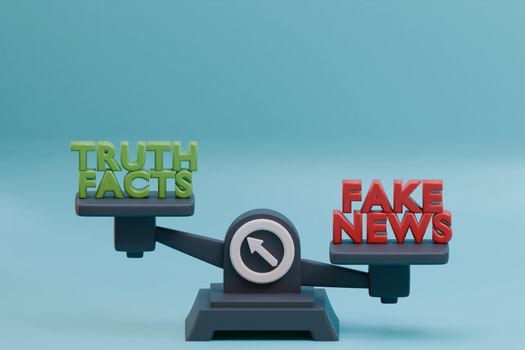
However, the USPA warns that the same tools can also be used to spread misinformation and manipulate public opinion. A 2020 study by the Massachusetts Institute of Technology found that false news spreads six times faster on Twitter than true news. The viral nature of social platforms makes it easy for rumors, conspiracy theories, and propaganda to gain traction, sometimes with real-world consequences.
In response, both social media companies and traditional newsrooms are investing in fact-checking partnerships and digital literacy campaigns. The USPA supports these efforts but stresses that long-term solutions require collaboration between journalists, technologists, and policymakers to protect the integrity of public discourse.
Final Thoughts: Navigating the New Journalistic Frontier
The rise of social media has profoundly altered the landscape of traditional journalism in the United States. From changing how news is gathered and delivered, to disrupting business models and reshaping public discourse, the impact is both complex and far-reaching. The USPA’s analysis suggests that while social media presents formidable challenges, it also offers opportunities for innovation, collaboration, and greater public engagement.
For traditional journalism to thrive, it must embrace digital transformation while upholding the values of accuracy, fairness, and accountability. By leveraging the interactive power of social media and maintaining rigorous editorial standards, news organizations can continue to play a vital role in American democracy.